


Lumbar osteochondrosis, with its diverse symptoms and treatments, is one of the most common pathologies of the musculoskeletal system.
This condition is characterized by degenerative dystrophic changes in the intervertebral discs that spread over time to the ligamentous and bony tissues of the lumbosacral spine.Without treatment, the acute process will inevitably become chronic.
Degenerative diseases can turn healthy people into disabled people.
Degree of lumbar osteochondrosis
Lumbosacral osteochondrosis is divided into 4 degrees.The progression of the disease is as follows:
First degree.Inside the annulus fibrosus, lesions form in the form of cracks into which the contents of the nucleus pulposus penetrate, causing irritation.This is the initial stage of osteochondrosis.The disc deformation is barely noticeable and can cause reflex pain during sudden movements and lifting heavy objects.Unpleasant sensations in the lower spine may be moderate and manifest themselves:
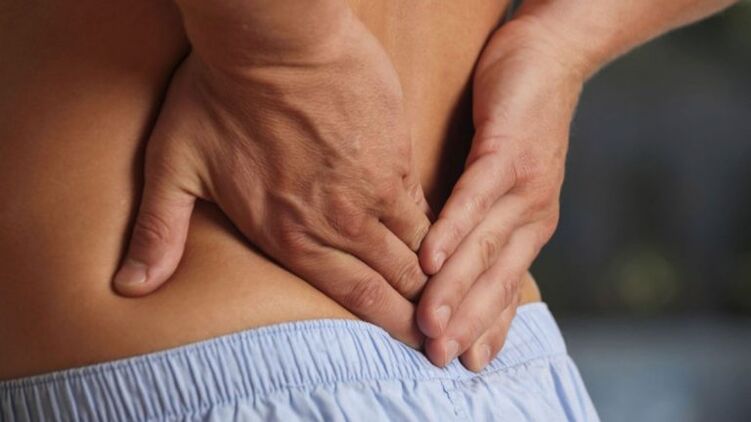
- Low back pain - persistent pain in the lumbar spine;
- Low back pain – a sudden “shooting” of pain in the lower back.
Second degree.The process of destruction continues in the annulus fibrosus.The distance from one vertebra to another shortens, causing nerve fibers to become compressed.Discomfort in the lower third of the back, sometimes developing into painful attacks.
Level three.During this period, the annulus fibrosus is eventually destroyed as the nucleus pulposus is extruded.Blood vessels and nerve endings are compressed by the disc.Formation of intervertebral hernia.The spine curves, forming:
- Lordosis - a bowing deformity of the lumbar region in which the spine bulges forward;
- Kyphosis - Opposite of lordosis, when the arch forms outward;
- Scoliosis is a pathological curvature of the spine to the right or left.
last degreeOsteochondrosis is considered the most serious and dangerous.At this time, the spine has deformed and lost its normal ability to move.X-rays show bone growth in the lumbar spine - this is the body's response.You may be pain-free for a while, but that doesn't mean you're getting better.People with stage 4 sacrolumbar osteochondrosis are often disabling.The reason is that the current process is relatively complicated.
Causes of lumbar osteochondrosis
The causes of lumbar osteochondrosis are as follows:
- The spine bears a disproportionate load.Humans are upright creatures, therefore, the load on the spine when standing is considered normal.Moving, bending, and straightening are required during various movements.In order to keep the body in the desired state, the musculoskeletal system is placed in a state of prolonged tension.When sitting, the load on the spine increases, while when lying on the back, the load on the spine becomes minimal.When a person maintains a posture for a long time, the lumbar and sacral vertebrae are overloaded and the muscles cannot rest, which will first cause discomfort and then pain.This deformation factor creates prerequisites for the occurrence of lumbar osteochondrosis.
- Sedentary lifestyle.It leads to the development of various pathologies, including those affecting vertebral structures.Sitting for long periods of time can lead to deformation of cartilage tissue and loss of muscle tone, leading to osteochondrosis of the lumbar spine.
- Excessive physical activity.Neither a lack of active physical activity nor excessive physical activity brings any benefits to the musculoskeletal system.Long periods of hard work, especially lifting and carrying heavy objects, can cause excessive strain on the back muscles and lead to the development of spinal hernias.
- Postural impairment.Improper walking can also cause the discs between the vertebrae to deform.The reason is again the uneven loading of the spine.The discs lose their elasticity and mobility, making them more susceptible to damage.People who are getting older are more likely to suffer from similar problems than others.
- Bone defects, hereditary diseases, injuries and infectious lesions.Typically, osteochondrosis is the result of a disease of the musculoskeletal system present at birth.For example, when the cartilage tissue of the body is fragile in nature.In addition, spinal lesions occur after trauma and infectious processes, such as osteomyelitis and tuberculosis.
- flatfoot.The hallmark of a "special" foot is the absence of notches and sagging arches.People with this trait often face spinal problems.This is due to the increased load on the intervertebral discs during walking.Throughout their lifespan, they take greater physical impact when moving and therefore wear out quickly
- obesity.Excess weight is a problem and an extra burden on the body.All organs and systems are affected, including the spine.
- pathological process.Dysfunction of various structures can adversely affect the condition of the musculoskeletal system.Therefore, factors causing lumbar osteochondrosis are endocrine disorders, cardiovascular problems, and digestive system dysfunction.
- Wrong way of life.Many people don’t pay enough attention to simple yet important things like physical activity, balanced nutrition, and regular sleep.Organisms that are chronically stressed become weak and fragile.Other conditions that may arise in this "fertile" soil include lumbar osteochondrosis.
Symptoms of lumbar osteochondrosis
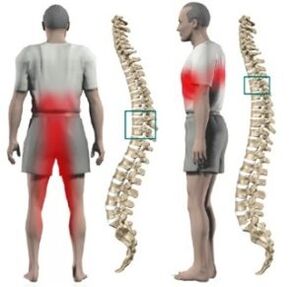
Lesions of the lumbar spine present with severe symptoms;
- lower back painIt is the most significant "signal" for the occurrence of lumbar osteochondrosis.She discussed the existence of "radiculopathy syndrome," in which compression of nerve endings in the spine causes pain in the lower back.The person becomes tired and irritable.Over time, performing simple, familiar movements becomes a big problem due to pain in the lumbar spine.If an intervertebral hernia develops in the lower back, pain may radiate to the lower legs, hamstrings, and feet.Over time, it becomes increasingly difficult to sit and walk.Even while lying down, the unpleasant sensation does not go away.Temporary remissions may alternate with periods of exacerbation.
- Urogenital system dysfunction.They manifest themselves as pain in the kidney area and frequent urge to urinate.Deformation of the intervertebral discs causes displacement of the lumbar region relative to the sacrum.This can affect the function of female internal reproductive organs and cause problems with male sexual performance;
- Reduced leg sensitivity in the foot area.It can be partial or absolute.At the same time, the reflexes in this part of the body weaken.Progressive pathology results in complete loss of sensation in the lower limbs;
- Gait disturbance.Lower back pain with osteochondrosis can cause a person to veer off course when walking in the direction opposite to where the nerve fibers are being compressed.Physical condition does not allow walking long distances.People with a limp are often forced to stop and wait for the pain to subside.Prompt medical assistance can save a person from becoming disabled.
Treatment of lumbar osteochondrosis
Many people wonder if lumbar osteochondrosis is treatable and how it occurs.Once the diagnosis is clear, the treatment strategy is determined.
There are many ways to treat lumbar osteochondrosis.What is necessary and recommended in order to cure a disease or minimize a person's condition is determined by the physician.
Some people treat themselves only with folk remedies at home, forgetting that they can only be used with the approval of medical experts and only as part of a complex therapy.
Drug treatment of osteochondrosis
Medication treatment involves the use of:
- Tablet form;
- injection;
- Preparations for external use - ointments and gels.
Prescription medications can eliminate inflammation and relieve lower back pain.They can be used at home.

These may be:
- analgesics;
- nonsteroidal anti-inflammatory drugs;
- Medications to treat muscle spasms (muscle relaxants);
- Means for restoring cartilage tissue (chondroprotectants);
- Corticosteroids (hormone-containing medicines designed to relieve pain and inflammation)
- vitamins.
The course of treatment is prescribed by a doctor, who sometimes prescribes pills or medications to calm the nervous system as additional treatment.
Physical therapy for lumbar osteochondrosis
Another common way to relieve symptoms of lumbar osteochondrosis is physical therapy.By affecting the spine and lower back, it enhances metabolism and recovery processes.
Most commonly prescribed:
- magnet therapy, laser therapy and electrotherapy;
- Phonophoresis;
- shock wave method;
- stress reduction therapy;
- vibration massage;
- Balneotherapy.
The doctor decides how many surgeries are needed and what procedures are needed.
Physical therapy is effective in the initial stages of pathology.But like other types of treatment, it has contraindications.Therefore, doctors consider many factors when prescribing this method.
Treatment exercises for lumbar osteochondrosis
A range of physical exercises for lumbar osteochondrosis is designed to restore mobility to this part of the spine.
Regularity is considered the main condition for its validity.Occasional exercise will not bring the desired results.
This method is not suitable if the body already has complications caused by osteochondrosis.In addition, contraindications to its use are severe pathologies of other organs and systems, as well as the presence of pain in the pelvic area and above.
Surgical intervention for lumbar osteochondrosis
Surgical methods are used in cases where severe complications such as intervertebral hernia exist.Depending on the surgical plan, the damaged disc is partially or completely removed (discectomy).
Indications for surgery are:
- Severe and persistent pain that cannot be relieved by medication for a month;
- Large size hernias and their impact on the spinal cord.
Osteochondrosis is easier to prevent than to treat.As with any pathology, it is potentially dangerous and associated with serious complications.It is important to understand that a more or less complete relief of this pathological condition can be achieved at the earliest stages, when the deformation of the intervertebral disc is minimally affected.In other cases, we can only talk about relieving symptoms and maintaining the body's normal life and work.